Social-Life Cycle Assessment (s-LCA)
The methodology
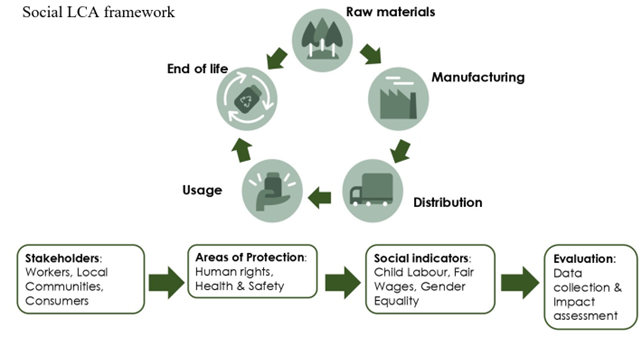
Social Life Cycle Assessment (S-LCA) allows farmers and researchers to evaluate the social and socio-economic impacts associated with grazing systems and small ruminant production. This data helps improve management practices by identifying potential risks and opportunities related to labor conditions, animal welfare, community well-being, and broader societal impacts. By focusing on stakeholders involved along the value chain, S-LCA supports more ethical, inclusive, and informed decision-making in livestock systems.
Objectives within the project
In this study, S-LCA was applied to assess the social performance of small ruminant grazing systems. The analysis considered multiple stakeholder groups, including farm workers, local communities, consumers, and society at large. Following the framework defined by ISO 14075:2024, and supported by the UNEP/SETAC Guidelines for Social Life Cycle Assessment of Products (2020), the study identified relevant social impact categories such as working conditions, health and safety, and social well-being. Both qualitative and quantitative data were used to evaluate the social implications of grazing management practices and pasture-based production systems, allowing the identification of critical social issues and opportunities for improvement.
Ecological context
This methodology can be applied across several ecological and socio-economic contexts, including extensive grazing systems, marginal rural areas, and regions where small ruminant farming plays a key role in local livelihoods. S-LCA supports adaptive management by considering context-specific social conditions and stakeholder needs.
Main constrains
The use of S-LCA in grazing management faces some constraints. These include the difficulty of collecting reliable and site-specific social data, the context-dependent nature of social impacts, and the lack of standardized indicators for certain impact categories. Additionally, the methodology often requires stakeholder engagement and interdisciplinary expertise.
Socio-economic contexts
The use of S-LCA can improve sustainability by promoting fair labor practices, enhancing social acceptance of livestock systems, and supporting community development. Results can contribute to sustainability certification schemes and strengthen transparency and accountability within the supply chain.