Precision Livestock technologies
Technology
The integration of Precision Livestock Farming (PLF) tools into pasture-based systems represent an important innovation for the management of small ruminants sector. These technologies allow researchers and farmers to collect continuous information on animal behaviour, welfare, pasture utilization, and physiological responses during grazing. Within this project, several complementary technologies were adopted to improve the understanding of grazing dynamics and to support more efficient and sustainable pasture management. These technologies include Virtual Fencing (VF) and GPS collars for grazing control and animal localization, accelerometers for behavioural monitoring, heart rate sensors for physiological assessment, and smart mobile fencing systems for flexible pasture subdivision and management.
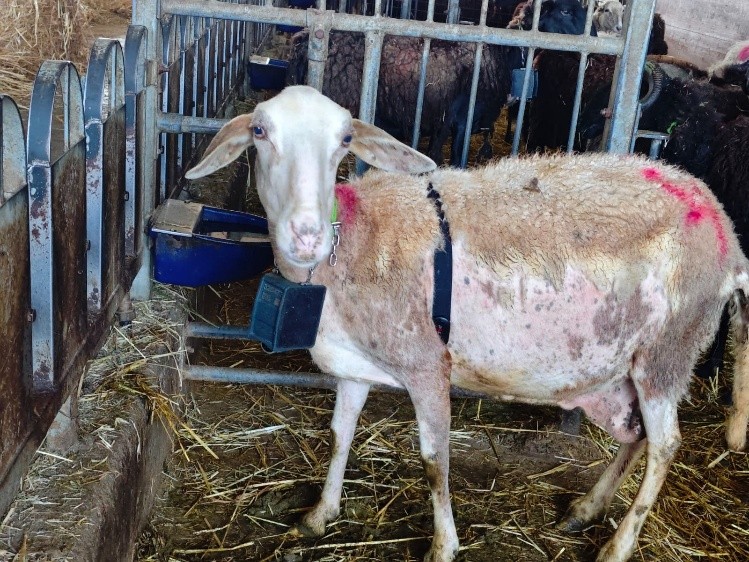
Virtual Fencing/GPS Collars for Grazing Management of Dairy Sheep
VF technology combined with GNSS tracking system are used to monitor and manage dairy sheep during grazing activities. The collars allow the real-time localization of animals within the pasture and provide detailed spatial data regarding movement patterns, grazing distribution, and pasture utilization. VF operate through predefined virtual boundaries that can be modified remotely without the need for permanent physical fences. When animals approach the virtual boundary, the collar emits an acoustic warning signal followed, if necessary, by a mild corrective electrical pulses, encouraging the animals to remain within the designated grazing area.
This technology enables dynamic pasture management, rotational grazing strategies, and improved control of grazing pressure while reducing labour requirements and infrastructure costs. In addition, GPS-derived data provide valuable information for analysing animal behaviour, spatial preferences, and interactions between livestock and the grazing environment.
HOBO Accelerometers for Estimating Grazing, Rumination, and Resting Activities
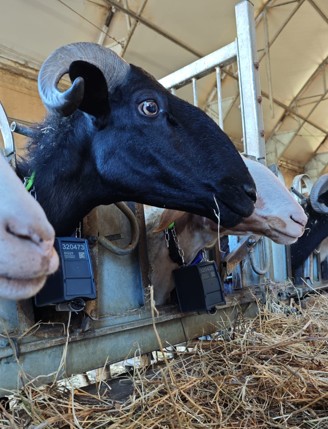
HOBO accelerometers are used to continuously record the grazing patterns of dairy sheep throughout their grazing activities. These sensors detect acceleration changes, allowing the classification of different behavioural activities such as grazing, rumination, walking, and resting.
The accelerometers provide high-frequency data that can be processed through algorithms to estimate the duration and temporal distribution of each activity. This information is essential for understanding animal adaptation to pasture conditions, evaluating grazing efficiency, and assessing welfare indicators. Continuous behavioural monitoring also allows the identification of changes related to environmental conditions, forage availability, or management practices.
The use of accelerometer-based monitoring systems represents a non-invasive and reliable approach for obtaining detailed behavioural information under extensive grazing conditions.
Polar Heart Rate Monitors for Recording Heart Rate in Relation to Grazing Activity
Polar heart rate monitoring systems measure the physiological responses of dairy sheep during grazing activities. Heart rate is considered an important indicator of animal activity level, metabolic effort, and stress response. The sensors continuously record cardiac activity, enabling the evaluation of physiological variations associated with movement, grazing intensity, and environmental conditions.
The integration of heart rate data with behavioural and GPS information could allow a more comprehensive assessment of animal responses during pasture utilization. This approach contributes to a better understanding of the energetic costs associated with grazing behaviour and can support the evaluation of animal welfare under different management conditions.
The use of wearable heart rate monitoring devices offers a practical and non-invasive method for collecting real-time physiological data in free-ranging grazing systems.
Gallagher SmartFence Mobile Fencing System
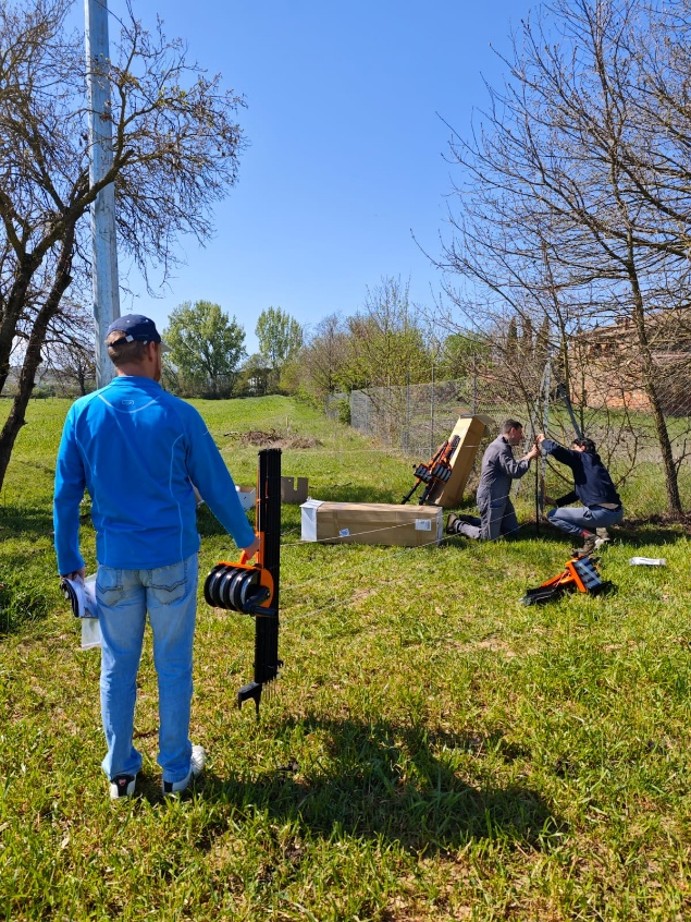
The Gallagher SmartFence system are a mobile fencing solution to support flexible pasture management and rotational grazing practices. This portable electric fencing system allows rapid installation and repositioning of temporary paddocks directly in the grazing area, significantly reducing labour and setup time compared to traditional fencing methods.
The SmartFence system enables precise control of grazing areas, facilitating adaptive grazing management and optimized pasture utilization. By easily modifying paddock size and grazing duration, farmers can better regulate forage intake, reduce overgrazing, and improve pasture recovery.
The portability and ease of use of the system make it particularly suitable for extensive and mountainous grazing systems, where traditional fencing infrastructure may be difficult or expensive to implement.