Life Cycle Assessment (LCA)
The methodology
Life Cycle Assessment (LCA) allows farmers and researchers to evaluate the environmental impacts associated with grazing systems and pasture-based livestock production. This data helps optimize farm management by identifying the main sources of environmental pressure, such as feed production, enteric emissions, land use, and resource consumption. By adopting a cradle-to-grave approach, LCA supports more sustainable and informed decision-making, improving resource use efficiency and reducing environmental impacts across the entire production system.
Objectives within the project
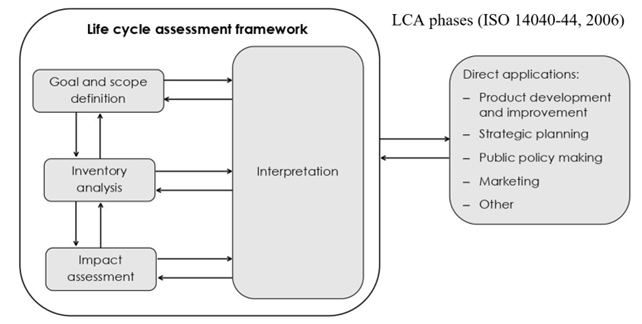
In this study, LCA was applied to assess the environmental performance of small ruminant grazing systems. Data were collected on key inputs and outputs, including pasture-based feed availability, energy use, water consumption, and emissions associated with livestock management. Following the framework defined by the International Organization for Standardization through ISO 14040:2006 and ISO 14044:2006, the analysis included goal and scope definition, life cycle inventory compilation, impact assessment, and interpretation of results. By analyzing environmental impact categories such as climate change, eutrophication, and resource depletion, researchers identified critical stages within the system and evaluated how pasture management practices influence overall sustainability. This practical approach supports data-driven decisions in pasture rotation, animal welfare, and land management, offering a valuable tool for improving the environmental performance of livestock farming.
Ecological context
This methodology can be applied across several ecological contexts, including rangelands, alpine pastures, silvopastoral systems, and semi-arid regions. LCA supports adaptive management in areas with variable forage availability or sensitive ecosystems, helping to balance productivity with environmental conservation objectives.
Main constrains
The use of LCA in grazing management faces some constraints, including the need for high-quality and site-specific data, the complexity of modelling biological systems, and the influence of methodological choices such as system boundaries and allocation methods. Additionally, conducting an LCA requires technical expertise and specialized software, which may limit its accessibility for some farmers and stakeholders.
Farmers benefits
The use of LCA can improve productivity and sustainability by identifying opportunities to reduce environmental impacts, optimize resource use, and enhance system efficiency. Results can support certification schemes for sustainable production and help producers access environmentally conscious markets.
Socio-economic contexts
LCA can support farmers in identifying efficient management strategies and improving sustainability performance. Moreover, it can help assess and improve the environmental efficiency of traditional grazing systems. Finally, LCA provides a scientific basis for implementing and validating environmentally responsible practices.